Showing posts with label Oriental lily. Show all posts

Saturday, August 4, 2012

Quousque tandem?

That's Latin for "you're starting to piss me off."

Consider:


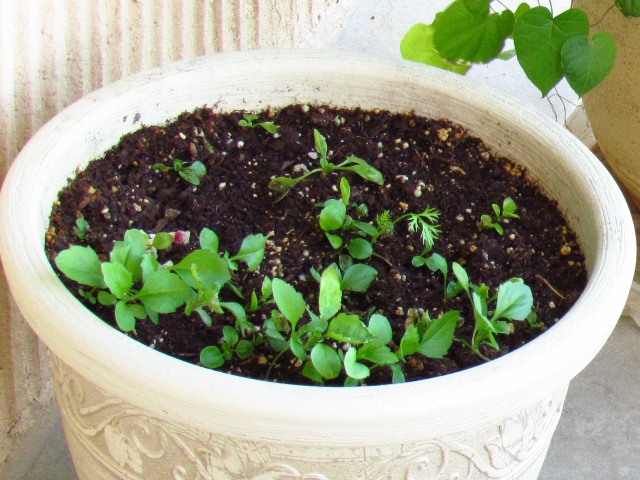
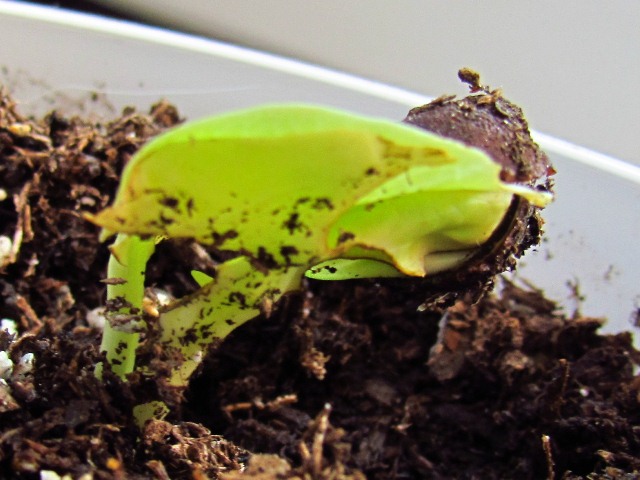
The top one is one of my double oriental lilies that I paid a fortune for. They started to come out of the ground May 18, and they've had flower buds since at least July 20. That is, one staid four inches tall for ever, turned brown, and died back, so it won't flower this year, if ever. The second one has buds, but they're not getting bigger, and I don't think they'll flower. And the third one, which I was hoping was Lodewijk, is doing this. One of the petals has since separated from the rest and it seems to have some light pink on it, suggesting it's gonna be Soft Music instead of Lodewijk. But whatever it's doing, it's just not doing it.

And the bottom photo is from the other lily location, where I put my Stargazer from last year and the "black" Asiatic lilies. As you may recall, one bloomed but was orange. The other two got immensely tall, didn't flower, turned brown and died back. And then when I cleared the weeds away some days ago, I saw that three out of the four lilies are coming up again. I'm guessing the two big ones are the two that didn't flower before, and if I recall how they were in the planter before I put them outside, it seems to me that the small one right next to the pear tree (if you can tell what's a pear tree in this mess) is probably the Stargazer. But whatever the case may be, none of the three has a flower bud. Again.

I am not amused.

Sunday, June 17, 2012

It's not all bad

Forgot to mention, my third double lily finally showed up on Wednesday, so now I don't have to buy more next year. Booya! At least one thing went right in the garden this week.

Sunday, June 10, 2012

Perennials, schmerennials


My perennial garden, a month after planting. Now that I can compare my perennials to everyone else's, it's becoming really evident how much sunlight my plants are missing out on. Some people's gardens are getting more than 20 hours of sunlight right now; mine gets barely eight in the sunniest spot, which is where I put my J.P. Connell. Of course the fact that all these perennials were just planted this spring also slows them down compared to established plants, but I blame mostly the sunlight.

More specifically, here is how everyone is doing.

  • J.P. Connell is putting out tons of leaves. Not a lot of height being gained, but certainly the leaves are doing great.

  • None of the tulips came up. That's too bad, but then again, it would be foolish to underestimate a plant. Maybe they're biding their time.

  • Only two of the three double oriental lilies came up, and I can't remember where the third one is, otherwise I'd dig and see what's happening. Now the thing is, there are three of them because they came as a set: Soft Music, which I really liked, Lodewijk, which I really really really really liked, and Magic Star, which I bought because it was included with the other two. So if the missing one is Soft Music or Magic Star, well, that's one thing. But if it's Lodewijk, I'll be very sad. On the other hand, now that my garden is essentially complete, I can afford to buy a few more Lodewijks next spring if I have to.

  • The Celebrity peony (the $40 one) is putting out canes. Not nearly as fast as everyone else's peonies that get three times as much sun, but it's alive and well. You can't be in a rush with peonies anyway, they live 20 years and don't like having their roots disturbed, so it's pretty fair that the first summer is a bit slow.

  • The Shirley Temple peony (the $12 one) has live roots, but so far no canes. I wonder if I should have buried the entire thing like I did with Celebrity. But, again, if it fails, there is a lot more room in the garden budget for next year, so I can replace it. In fact, I can replace it with something much fancier, from a peony specialist.

  • The Asiatic lilies are... still alive, I guess. They got horribly burned and beaten by the cold north wind since they've been out there, but the roots are alive. The orange one that wasn't what I ordered is even looking like there is new growth on it.

  • The Stargazer lily is out there somewhere... maybe. It hasn't come up. But since I paid $6 for it and it gave me some lovely flowers last year, maybe I've got my money's worth out of it.

  • The dicentra stopped blooming, but the leaves look very happy.

  • The toad lilies are all alive, though not growing quickly.

  • The anemones are growing. In fact, they may be the fastest-growing bulb I have.

  • The ranunculi which I bought from my work's fundraiser haven't come up, but it was more for a good cause than because I wanted ranunculi anyway.

  • Someone donated a foot-tall lilac. They grow everywhere in her yard because there used to be a big one that the landlord cut down. Anyway, it's wide awake. I put it in the shade, since they seem to be highly shade tolerant.

  • The flax finally seems to be prospering, though there isn't nearly as much as I should have got out of four packets of seeds. Hopefully this time it will establish itself and I won't have to do it again.

  • The pansies are sprouting, but since the dog picked that spot for her bed at first, I suspect most of the seeds stuck to her fur and are gone.

  • The hollyhocks are also sprouting.

  • The California poppies are also sprouting.

  • The pear trees are not moving much. They withstood the wind very well, but I suppose it must still be a drag.

  • The two mayday trees haven't leafed out yet and have no new growth whatsoever, even though they're alive and they were growing inside the winter hut. I might have to get more seeds in the fall.

That's pretty much the things I know about. I know I seeded some other things, but I don't know what I put where or what they look like as sprouts. There are certainly many shapes of sprouts coming up. I suspect some of them are from the bird seed mix, but clearly some are weeds. Luckily, I now know a black mustard sprout when I see it, so I've been able to pull them when they're less than an inch tall and still harmless.

Perhaps the greatest sign of progress is that I have not dumped thousands of seeds indiscriminately because "nothing is coming up." So it looks a little sparse right now, but when everything gets moving in July, it's gonna look pretty good, if I do say so myself. On the other hand, it certainly doesn't make for a lot of blogging.

Sunday, May 27, 2012

I hate my camera, or, the new summer garden

Once upon a time, I had the best camera ever: the Canon PowerShot S5 IS. Then Canon came up with the next generation of big zooms: the Canon PowerShot SX30 IS. I immediately bought it and gave my S5 away to a friend. Sadly the SX30 is worthless. Yes, it has a big zoom. That's nice. On the other hand, it's nearly impossible to focus. The autofocus is bad, the macro doesn't work at all, and the manual focus not only can't be worked in cold weather, it also re-focuses to be out of focus every time. Supposedly you could stop it doing that by setting "Safety MF" to "off", but I did that and it's still doing it. I emailed Canon about it and they said thanks for the feedback, we will certainly work on it. And everyone else said the same thing. So when Canon issued the next model, it was... exactly identical. Oh, wait, no: it has a CMOS instead of a CCD processor. Other than that, it's exactly the same piece of worthless, unusable junk that everyone told them wasn't working.

At times I've considered buying a Canon DSLR, although it would be a waste of money and I don't feel like walking around with that much weight around my neck. But since they're obviously not interested in selling me a camera, I'm now in the market for anything but a Canon.

Anyway, the point of this long story is, I'm not getting any reasonable pictures of sprouts, because my camera can't focus. But that being said, here is what's happening in the garden.

You may remember that back in October, I had winterised my garden, thusly:


I wasn't sure when would be a good date to open it up, but the weather has been so warm this spring, I could probably have done it much earlier than May 4. The reason I did it that day is, it was a Saturday, it was warm, and my spring bulbs had been shipped.

So. Step 1, clear my living room floor.


Wow, I have a living room? Who knew?

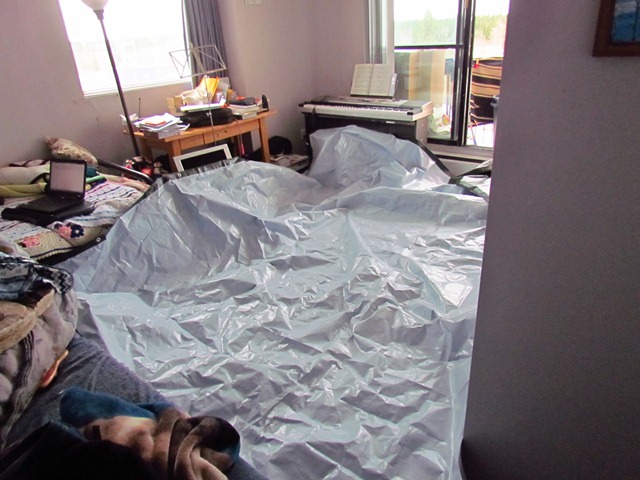
Step 2: remove the tarp from the garden, spread it on the living room floor.


Step 3: remove all the batts and pile them neatly on the tarp. I was extremely please to find that both the batts and the cardboard were still in their original condition: no weathering, no mold, nothing. Perfectly preserved. Yay, me!


Step 4: fold up the tarp and use the same rope to tie it all up. It didn't pack down exactly as small as in the original packaging, but it's pretty compact, as used-batt-storage goes.


And yes, I did make a handle with the rope. Rope work is one of my many untapped talents, if I do say so myself. (Thank you Dad for all the summers on the ocean sailing Lasers!)

The result:


Ok, you can't see in the picture, but it's perfect. The two trees are still alive, they still have water, they are neither dry nor moldy. The Jungle is neither dry nor moldy. Everything performed exactly as planned. BOOYA!

Now, I need to set up my giant flowerbeds.


What the???? They don't have any bottoms! Aaaaaaaah! Well, that explains why they were so affordable. And it does give me some latitude in setting them up: as you can see in the bottom left corner, I can slide it so it's a rectangle instead of a square, thus giving me a little more room to walk around them.


I used 2" rigid to make a bottom. I'd have needed some rigid insulation underneath for the winter anyway. The only difference between this and having a bottom is, I won't be able to move them. I had been toying with the idea of moving to 707, because the 07s are one-bedrooms with the biggest balconies and the best exposure in the whole building. It would have been rather difficult to move these giant planters had they had a bottom; without a bottom, they'd have to be disassembled and the dirt wheelbarrowed over there, and I doubt I'd have that kind of ambition. Oh well; saves me a fortune on rent and prevents people inviting themselves to live in my house.

The insulation was donated by Drill Guy, who insisted on "helping" with this project. As if I needed help. I did need insulation though, and this is about $70 worth, which is nice. Except I don't like having a $70 obligation to some dude. But oh well.

The gap between the two sides is deliberate, for drainage purposes. Then as you can see, I put some mesh screen over the gap, to prevent the soil from washing away.


Then, I dumped the used soil from previous years, which I was keeping in a large garbage can, and all the planters. The ones you can see here, all root-bound, are the Wall of Insanity. Brutal, isn't it?

But as we know, I needed much, much more soil. Thusly:


I think I ended up with about 20 bags of soil and manure. And this is my very awesome Fnord minivan, which is excellent for hauling anything under the sun.


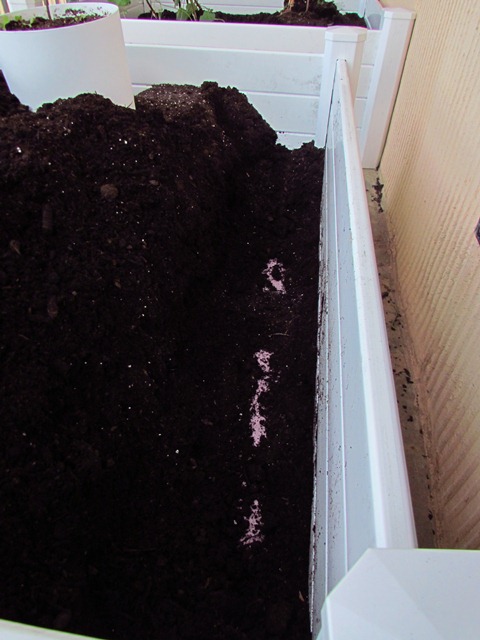
This is how much bonemeal it takes for one flowerbed. Finally, I'm making a dent in my inexhaustible supply of bonemeal.


The thing is, and I should have thought of it sooner, the pressure from the soil caused the free side to slide out, thus reducing my walking space, increasing the amount of soil needed, and leaving a gap between the insulation and the wall. So, I had to dig the soil away from the wall,


slide the wall back into place, and stabilize it with spacers made from the lumber of the dog's former lawn.


I transplanted everything that was ready to go out, but it didn't lend itself to much photography. I had tulip bulbs in the fridge. The tulip bulbs in the Jungle got too much moisture and were all squishy; I threw them out. Peng Dehuai and Liu Shao-ch'i are wide awake. Deng Xiaoping, sadly, died. Funny that the two that were outside lived and the one inside died, but I'm not surprised. It broke dormancy and then got too much water, or some such problem. Anyway, it's dead as a doornail. I'll have to find something else to name after Deng Xiaoping. Also my two pear trees. Oh yeah, I only have two pear trees left, because the other two got so badly infested with spider mites, I cut them off and put them in the garbage. Sorry, little dudes. Natural selection didn't select you.

What else... My peony, but more on that later. My flax / dogwood / cotoneaster experiment, which is displeasing me considerably. And my old lilies: the orange one that was supposed to be black, the two that never flowered that were supposed to be black, and the Stargazer from last year, which hasn't shown any sign of life since being moved in with the other lilies.

Two days later, my spring bulbs arrived. Yay, spring bulbs! A big box, too. Ooooooooh, exciting!


This is my $40 Celebrity peony. As you can see, it's wide awake. The downside is, I have absolutely no idea which side is up and which side is down. Hmmmm... Think think think. I ended up burying the whole thing. If I know anything about plants, it's that they have excellent proprioception. A few days later, I worried that this was the wrong thing to do, so I dug back to my peony root, and found that it had grabbed on to the soil and was sending upwards growth. Booya!

My other peony, the $13 Shirley Temple one, came in the fall and had no growth on it at all. It shouldn't, of course. Fall bulbs are supposed to be dormant. So I had it in a planter all winter, and it never did anything, and I assumed it was dead. But when I set up the garden, I dug it up, and found the roots were starting to produce some downward growths. Rhizomes, maybe. I don't pretend to know the difference between a root, a bulb, a rhizome, or all the other disturbing things plants do under the ground. I do, however, know the difference between alive and dead, and both my peony roots were very much alive as of two weeks ago. They're still not growing above ground, but I looked at other people's established in-ground peonies, and they're not doing anything above ground yet either.


And this is my J.P. Connell rose. J.P. Connell is one of the hardy Explorer roses, developped by Agriculture Canada for our climate. Back when the Canadian government actually did things for people. Here, J.P. Connell is soaking, along with some anemone bulbs. And as you can see, it too is still alive, with green growth already showing on the canes. At least I don't have to guess what's up and what's down on this one.


These creepy things are toad lilies. There is supposed to be one purple, one orange, and one pink.

There were also three double oriental lilies in the package, which I didn't photograph. If they succeed, they will be absolutely spectacular.

As for the anemones, they're not supposed to go out until after last frost, and I was in a hurry, so I dumped them into something that had soil and nothing growing, put some dirt over top, and forgot about it for a few days. Then white mold got at them and ate about half of them. Boohoohoohoohoo... How sad. But then again, maybe I shouldn't have bought anemones. They're not even the ones I really wanted. Now the survivors are sprouting. We'll see.

Then, I also seeded everything I could think of: jacks-in-the-pulpit, dodecatheon, all the pansies, hollyhock, columbine, California poppies, regular grass, cat grass... That's all I can think of. And I can't quite remember what I put where. I know where the poppies and hollyhocks are, and more or less the jacks and dodecatheons. For the rest... it will be a surprise, I guess.


Voila. This was the summer garden as of 10:14 on May 12.


This is J.P. Connell today. As you can see, it's wide awake. I'm taking it as a bellwether for the health of the roots that have no above-ground component yet. If the rose is doing ok, so must they. Right? I hope so.


And this is one of the double oriental lilies. Took about eight tries to get the camera to focus on it. Again, if this one is alive, that must mean conditions are adequate for the other ones underground, right? And as you can see, the grass is starting to sprout. There are some other seeds sprouting, but since I forgot what I put where, and the whole thing is riddled with old seeds from the last three years, it could be anything.

This morning the weather being ridiculously warm and comfortable, I also transplanted the dicentra. I bought it from the hardware store a while back. As you may recall, the hardware store has a habit of carrying bulbs in little baggies. It's a horribly unhealthy thing to do to a bulb; they come on a truck from who knows where, and then sit in the store for days or weeks waiting to be bought by someone who doesn't know better. That's how I got my Stargazer. And this particular dicentra looked very healthy for all that, and what's more, it's a white one. Dicentra is commonly known as "bleeding heart" and I don't really like the pink ones. I didn't even know it came in white. So I took it home, put it in some dirt, immediately it grew and flowered. I could have sworn I took pictures of the flowers, but I'm not finding them. Anyway, it's very pretty. But now it's just putting out leaves and no more flowers. Anyway, I didn't want to put it out in the cold wind too soon, but this morning I found it a spot outside. Now I just got to do the anemones, and then I won't have anything left to plant.

Hmmmmmm...

Ok, so what do I do with the rest of the summer? Grow pumpkins, I guess. But that's for another post.

Friday, March 16, 2012

A pleasant surprise

I decided to repot my giant pumpkin, which is getting absurdly tall because of the lack of light. I figured it could go into Planter #9, where nothing else is happening. So I thought. #9 was supposed to be a holding tank for some of my perennials: one globe thistle, the "blue" geranium, and the Stargazer lily. But they seemed to be all quite dead. So I started digging. The old Stargazer stem is fully dead and had just a few spindly dead roots, as I thought. But to get the pumpkin in there, I had to dig almost six inches, and at the bottom, I found a lily bulb.

Seriously. It looked just like the other lily bulbs I had in the fall. Very fresh and healthy, as far as I can tell. Though of course I don't know much about bulbs. What I do know, is that it never looked like that when I planted it, or when I transplanted it, and it's much, much deeper than I ever planted it. So somehow, it dug itself down several inches, and then separated itself from the dead stem, and lay in wait.

These plants are getting creepier every day, I tells you.

In any case, I dug the bulb into the other lily planter. I hope it will flower this year, as the others aren't looking good. The one that bloomed before won't bloom again until next year. One of the other two got broken, and presumably won't bloom either. And the last one is extremely tall and convoluted. It's on a four-foot stake, but it looks badly scoliotic, and there is a hairpin turn near the top. I'm sure that's all just lack of light, and shouldn't prevent it from flowering, which I hope it will do in black, as it's supposed to, but I don't trust it. So, the Stargazer may be my best hope so far. I do have three more coming from my advance order of spring bulbs, and if I ever get my new credit card, I'm hoping to get another two.

(My credit card expired and the new one got lost in the mail. I had a new one sent, but haven't received either. So I can't shop online, until further notice. Maybe I should send a money order.)

Now the best thing about this isn't so much the Stargazer, but the hope that my peony might be also be lying in wait. You may recall I got a Shirley Temple peony root in the fall, and I put it in a planter. It hasn't done anything at all. No growth, but no decay either. I keep meaning to dig it up and see what's going on below ground, but that wouldn't do any good. And likewise Deng Xiaoping has been doing nothing ever since its leaves died off in the fall, but the branches are still flexible, therefore probably still alive. So I'm thinking, if the Stargazer can dig itself deep into the ground and lie in wait for months, so can the peony, and certainly a deciduous tree can do the same.

Friday, November 25, 2011

Another one!!!!!

The third flesh-eating alien hasn't emerged yet, but while tidying up in Planter #9, where the herbaceous perennials from the 2011 garden are wintering, I discovered something else. Presumably it's the oriental lily coming up again, which is annoying because it bloomed too soon "last" year, which was really this year but last gardening season, and now it's going to bloom even sooner and I'll have no lilies at all for Yards in Bloom.

On a positive note, the fact that this is almost certainly a lily suggests that the ones in Planter #21 might also be lilies, and not, as I thought, flesh-eating aliens.

Saturday, October 29, 2011

Welcome to the Winter Garden

Here is what's going on in the Winter Garden, that is, my living room. (I live in a bachelor suite, so my "living room" is also my bedroom, music room, office, kitchen to the extent that there is no wall between the two, and tropical plant conservatory.)

  • Planter #8: one Passiflora edulis that survived my complete lack of effort and some overwatering over the summer. Also there are some seed pods I harvested off an unidentified yellow-flowering plant in someone else's yard, and an avocado pit that I've buried in there, but I'm gonna dig it up because it's probably just rotting instead of sprouting.


  • Planter #9: the oriental lily, having now shed all its leaves and been cut back to the ground; the alleged "blue" geranium, still alive, still not blue; and two or three globe thistles, one of which is putting forth some new growth. I don't expect much from any of these, but that's no big deal. I'll get more globe thistle seeds in the spring, and the other two never meant much to me.


  • Planter #10: two pear trees.


  • Planter #11: the Hope lemon tree, beautiful as always though currently dropping leaves. I gave them 6 L each of water around October 13, when they seemed to be finally thirsty, and as a result they are again showing signs of being over-watered. In addition, they are getting no light lately, October being a particularly bad month for sunlight. People think we lack light in winter; in reality, the real winter months have lots of beautiful sunny days, but while the lake is open in October and November, we get mostly overcast skies and precipitation. It's depressing for people, and makes lemon trees pale and sad.


  • Planter #12: the Faith lemon tree, again showing its strength compared to Hope by not complaining so much about the circumstances. On the other hand, and I'll tell you more in a later post, Faith has the problem of very poor branching habits so far, so that I have the choice of pruning almost everything off or letting it go on with really crowded branches until a path suggests itself.


  • Planter #13: two pear trees.


  • Planter #18: baobabs and lychees. This planter is now in a dark corner against the heat register, after I read a post on a gardening forum from someone who couldn't get his kaffir lemons to sprout until he built them an incubator and raised the temperature to 35 C. That reminded me that my original baobabs were sprouted in June, so in warm weather, and my lemons were sprouted by leaving them against the heat register for a month. So I hie the planter thence, and sure enough, now I have a digitata sprouting. Perhaps even two digitatas, as I planted the dried-out (I thought) seeds from the previous attempt, and I seem to be seeing two roots. However, time will tell. At least one za seed is not sprouted yet; I know because I removed some surface mold with a fork and found it, the mold, had reached the seed. So I washed off the seed, which seems healthy though not cracking yet, and replanted it. As for the lychee, I'm not touching it. I can see its shiny carapace, so I know it hasn't rotted yet, and there is no point in disturbing it yet again.


  • Planter #19: Deng Xiaoping


  • Planter #20: the peony, which is of a variety called "Shirley Temple". I don't like that name, but the catalog photo was pretty. This afternoon I decided to make sure I had the planting depth right, so I dug it up, measured 1 3/4 inch up each stalk, tied a string marker there, replanted it so the dirt came up to the string, and then removed the strings. We construction workers like this sort of simple-minded trick. So now the peony is also by the heat register, awaiting its fate.


  • Planter #21: the Asiatic lily / grotesque carnivorous alien bulbs. This one is in the kitchen right now, but I might move it to the heat corner... later. If the fancy takes me. And if I get around to tidying up that corner, which was recently occupied by some sort of amorphous clutter.


  • CryoVat: there are actually two cryovats going right now, one for cherry pits which I plan to destratify in two weeks or so, and one with holly seeds which still have six weeks to go, and even so, I mentioned it before, can take "18 months to three years" to sprout. I'm not sure where I got the idea that I want to be challenged by my garden, but apparently, that's the path I'm taking.


Meanwhile, on the balcony:

  • Outdoor CryoVat: Planter #17 is out on the balcony with dogwood and cotoneaster seeds. Like I said before, I figure that since it worked for the maydays, it should work equally well for anything I harvest around town. Meanwhile it's also contributing to my heat reservoir, if only a little.


  • In the Winter Hut: the Jungle, with bulbs of tulips, daffodils, and stuff I don't remember the name of which is welcome to die; and also hollyhocks and flax from this year, which I hope will live to fight another year. Also, Liu Shao-ch'i and Peng Dehuai, which I really really really hope will make it. Inshallah.


So now you know.

Saturday, October 15, 2011

Foiled again!!!!

Well, the experiment with the sand-perlite-manure mixture was a complete failure. Whereas soil retains too much moisture, this mix retains too little, so all my seeds dried out. That would be my last four apricot seeds, which I had religiously stratified for the whole duration; my remaining baobab seeds; and my lychees. Fortunately, one of the lychees was not yet germinating when I moved them to the sand planter, so now it has a root that looks like it might still be alive. I'm not 100% on that, but it might still be alive. So I moved it to yet another baobab nursery planter, with the new baobab seeds that I recently received from my supplier. This time I'm doing one seed at a time (one from each species, I mean), and the mix is mostly soil with some perlite in it. Perlite improves drainage, so, we shall see.

No chance of more apricots or lychees until next year, though. What a nuisance. I hope that one lychee is still alive, but I'm not optimistic. Also, I was gonna get some catalpa seeds, but my supplier of rare seeds doesn't have them right now, and I can't find them anywhere else online. So if you know anyone who sells catalpa seeds, let me know.

Meanwhile, I brought in the Guerilla Planter, with Deng Xiao Ping, the chief aster, and, as it turns out, four pear trees that have survived being completely ignored all summer. In fact, maybe complete ignorage is better for trees than constant fussing. In any case, all four look wide awake and full of ideas. This poses a problem as to potting. Pear trees make taproots, so I don't doubt those four little trees are down to the bottom of their planter, and I'm going to need (four) tall planters for them. On the other hand, since they have taproots, they're probably not crowding into each other, and therefore repotting is probably not urgent. So maybe I can leave them alone until somewhat later. The bigger issue is that both pears and chokecherries are seasonal trees, which is to say they need a period of dormancy. Deng has shed most of its leaves, as have Liu Shao-ch'i and Peng Dehuai. Those two are staying on the balcony for the winter; Deng and the pears are inside, and the pears are bright green and not looking at all disposed to go to sleep. Will they survive a winter in the house, or will they die from sleep deprivation?

The next day, I also repatriated Planter #9, which contains the last surviving "blue" geranium, still decidedly purple but also very much alive; my oriental lily; and the globe thistles. Again, these are hardy plants, therefore I doubt they'll be happy in the house all winter, but then again, they have disappointed me, so if they die, so be it.

But that's not all! I still have seeds in the fridge! The holly seeds moved from warm stratification to cold stratification on October 10. I also have a bunch of cherry pits that have been stratifying since September 11. According to my sources, cherries are inconsistent in their stratification habits and can start sprouting even before being warmed up; I'm thinking I'm gonna give them six weeks.

Also, I have more seeds stratifying outside! The fun never ends here. I harvested some berries off some shrubs that had nice fall colours. One is cultivated and seems to be intended for a hedge some years from now. I believe it's called Peking cotoneaster. The other grows wild all over town and is possibly a red osier dogwood. Or some other kind of dogwood. I planted both in Planter #17, formerly home of the pumpkins. They'll die, or they'll come up in the spring. Stratifying outdoors worked out perfectly for the chokecherries, so I'm taking the view that anything I harvest out of doors (rather than from fruit bought from the store) can stratify outside.

What else... Faith and Hope are doing very well, thank you. They've been inside September 11 and are both putting on some growth. And I just bought two mandarins today, which hopefully will have some seeds in them. I'm not hungry enough to eat them right now, though. I wonder whether they need stratifying or not. China is pretty cold, but I can't think of any other citrus that needs stratification. I better google it.

That's about it for plants I'm working on right now, really. Out on the balcony, there are a few things still in bloom: poppies, "Baby Blue Eyes" nemophilas, English daisies, bellflowers, which finally bloomed on September 15 and are completely underwhelming, one convolvulus, one dianthus, and pansies. The morning glories still have flower buds on them but have been unable to open for some time now because it's not warm enough. Likewise the marigolds formed buds, to my surprise, as far back as September 11, and have been progressing slowly ever since; I doubt they'll succeed in flowering. Among the morning glories, the following cultivars did not bloom: Heavenly Blue, Kniola's Black Knight, Chocolate, and Blue Star. The thunbergia vine, cypress vine, and Darth Plant also did not flower. I'll be planting Darth Plant again next year, but not thunbergia. Undecided about cypress vine.

Also undecided is what I'm gonna do with the colossal amount of seeds I've harvested off my morning glories. The obvious answer would be "plant them", but with very few exceptions, they're from Insanity Leader, and therefore all varieties I've done several times. For next year, I'm going to get all the same varieties I had this year, and any more I can find, but I'm gonna plant one variety per container, and keep them all straight and orderly; that way I'll know what seeds I have. The current collection of seeds is really of no use to me, so I could either find somewhere inconspicuous to dump them, in which case I suspect they'll run over the town, or throw them in the garbage, in which case they will colonize the dump. Or scatter them at the dump and call it "beautification."

At this time, to be honest, I'd really like to get a nasty frost to kill everything non-hardy, so I can start winterizing. It's not really fun watching plants that aren't doing anything, and if this warm fall gives way suddenly to winter, I'll be out there in nasty weather cleaning up, and I'd rather not do that.

So, now you know.

Wednesday, August 17, 2011

High-maintenance gardening

I've been reading gardening books lately and they seem each more worthless than the last. And one thing they all advocate is "low-maintenance gardening".

Really?

I love doing maintenance in my garden. Otherwise I wouldn't garden at all. In fact I'd like to be doing more maintenance right now.

Today I'm angry, bored and out of sorts. So, I messed with my garden. First of all, Insanity Plant was leaning more and more, and after this afternoon's fit of wind I couldn't get it back to normal. I cut off the top, thinking it was top-heavy, but that didn't help. I tried to rotate it so I could tether it from a different angle, but it was strangely immovable. So I investigated and found it had wound itself around everything it could: the pumpkin vine on the floor, the hollyhock in the Jungle, which it broke, the poppies, the balcony railing, the old chunk of cable, everything. And it was tight, too. I had to cut off some stems of various things to get it to rotate to a better angle, and now it's upright and stable with I think one guy line left and all the rest of the work done by its own vines. I think I'm gonna change its name to Codependence Plant.

The other thing with morning glories is that they make lots of yellow leaves. This doesn't seem to bother them much, and in any case, it's fall, leaves should be turning yellow. You just pull the yellow leaves and move on, but there are always more you can pull if you're angry, bored and out of sorts. Also I've been harvesting its seeds, and that takes a lot of looking through the foliage. I feel like one monkey grooming another, but then again, gardening makes me feel like a monkey in a weird behavioural experiment anyway. And besides, I'm in a bad mood and it suits me to think angry thoughts about monkeys.

Once I got things tidied up around Insanity Plant, that gave me access to parts of the Jungle that I hadn't even seen in weeks, which needed lots of tidying too. Then I swept up the debris and tried to move the pumpkin vine out of the way, and cracked it again. The current pumpkin candidate seems in good health so far, but its vine is cracked in at least three places now, so I don't know if it's going to die or if that doesn't bother it. I relocated it out of the way of traffic, more or less, but I'm pretty much resigned to having no pumpkins again this year.

After that I picked the yellow leaves out of the Wall of Insanity, and then I looked at the geraniums.

Ha. They look like death on toast.

So I brought the planter inside and started by skimming off a layer of soil because it had mold. Then I snipped off all the broken stems, dead flowers and damaged leaves. Then it was still an ugly, tangled web of deceit and ugliness, and it seemed to have an awful lot of stems considering only three seeds sprouted at all. But I finally identified the three loci from which it was growing, and I decided to pull two of them.


That's the geranium roots. All that for five ugly purple flowers? What a waste. I kept one, so it can try again next year, but I'm totally displeased with them. Then I dug up my oriental lily. I didn't knock the dirt off its root to see what it looked like, as I'm not trying to kill it. I moved it to the geranium pot and then put the pot back outside. That's gonna be a novel experience since it's been inside and in full shade all its life. And I do mean "full" shade, as in no direct sunlight whatsoever. The stem is very sturdy, but since it's still windy out, I put it between two planters of the Wall of Insanity, where the vines can give it some shelter and support.

Then this allowed me to put the 14" planter out on the balcony, which frees up some room in my living room, where it was looking ugly anyway.

After that I was still angry, bored and out of sorts, but at least I had killed a lot of time. Then I killed some more by looking through the plant catalog and thinking about what I'm doing next year. Though that's really impossible to predict, as I don't even know when I'll ever have money.

I'm going to bed now.

Sunday, July 3, 2011

Garden update


The Jungle is thriving, as you can see. I've thinned out the poppies (top left) quite a bit, but we could still lose at least half of them.

The huge thing going up into the top right corner is one of the zombie plants. I removed all but two, because I'm more and more convinced they're petunias. Petunias are nearly indestructible, as far as I can tell, which would be an awesome quality if I liked them. As it turns out, however, I'm only moderately fond of them, so two is about as many as I want to keep.

The thing trying to crawl out of frame in the bottom left corner is a convolvulus. A convolvulus is "like" a morning glory in shape, but comes in different colours, and according to the seed packet, it "does not have a climbing habit" and grows to about a foot tall. I wish they had mentioned that it crawls quite agressively, and in particular, it keeps trying to crawl all over my globe thistles, which I don't appreciate. So I keep relocating it, but it always finds a way to crawl over something important, such as my poor little flax sprouts. I've never managed to make flax flower yet and I don't want it ruined by a convolvulus. If this trend continues, I might have to get rid of the convolvulus.

Other than that, the globe thistles are doing fine. Nothing particularly interesting happening with them. Likewise with the flax, the ones that sprouted are carrying on, nothing much to say about them.

The Shasta daisies are mostly hidden by the zombie plant here. Now that there is a bit of volume happening, their poor sprouting performance isn't so noticeable. And as we've seen with the poppies, there is such a thing as too much success.

The lupins, delphiniums and hollyhocks are starting to look quite solid, which they'd better because at this point anyone who doesn't get a move on is going to get crushed by the zombies, poppies and convolvulus, and that would annoy me extremely.

There is one pampa's plume that I can find, it's looking nice and healthy.

The four o'clocks are now also becoming very aggressive. I've pulled one out already and might have to whack some more. I wish seed packets would tell you when a plant has a tendency to take over the world like that, then I might not plant crazy weeds with my most valuable species all the time.

Hidden behind all this on the sunny side are all the little plants: bellflower, nemophila, California bluebell, and... other stuff that I forget. They are not doing well and the poppies keep flopping over them so they're not getting the sun. Clearly, this project wasn't very well thought-out.

Oh well. Let's move on.


The window boxes. As you can see, I've relocated the one from the sunny location next to the shady one. The shady one had much better sprouting than the sunny one, but the real reason I did this is because the sunny one was casting a shadow on more important plants. In any case, they're doing fine.


Pumpkins. As I've mentioned, I've never succeeded with pumpkins yet, but I must say, these are the best pumpkin leaves I've ever grown. I'm attributing this early success to the fact I thinned them out, but then again, it could be just because they're in a shadier spot than last year. If I'm understanding things, plants make bigger leaves to grab more light, so big leaves isn't a sign of success, just a comment on the light.


Here we have asters at the top, doing fine. The English daisies in that planter, not so much, but oh well. I got lots more. Asters are really slow-moving for annuals. I tried them two years ago and they never had time to flower. If these don't make it by first frost, I'll bring them inside and hopefully get something that way.

Bottom left is the vat of English daisies, looking verdant and enthusiastic as you can see. I really like English daisies, so I'm pretty excited to see all this growth.

Bottom right are my pansies. Not much to say about them... they're growing. That's what plants do.


The Wall of Insanity is also looking lush and determined, but hasn't reached climbing mode yet. I'll make a note of when they start winding around the railing, that way next year I can start them indoors and they'll be ready to climb as soon as last frost passes.

Darth Plant is still in there somewhere, but still losing ground compared to the Ipomoea vines. Oh well. Better luck next year.

Note also that the dog's lawn, on the right, is needing a haircut.


The trees. Everyone is doing fine. The lemons don't mind being outside, but then again, it hasn't been windy yet. The maydays are fine. Liu Shao-ch'i hasn't complained about being transplanted. The pear tree I thought I damaged is actually thriving so far, though I didn't get any usable photos of it. You can barely see it as a green dot in the far right planter in the back row. The other one is still in Deng Xiaoping's planter. I'll move it later, if it doesn't die first.

The far left planter in the front row is the geraniums. Progress is slow. Some leaves have been burned by the wind. My early optimism is beginning to fade.

Not pictured are the baobabs, the plum cuttings, Insanity Plant and the oriental lily.

The oriental lily flowers are now wilted. I'm not sure what it's supposed to do next or whether I should remove the dead flowers. I'll google it tomorrow.

Insanity Plant is sulking. It doesn't like change, so it has been flowering very little since I put it out on the balcony. Also, a lot of the leaves have been eaten by the wind. It seems to have given up on reaching the next balcony. I'm sure it will pick itself up, though. It's indestructible.

The cuttings are still having tons of fun in their fun gel. They're more or less upright and clearly alive. No roots yet, but that's fine. It's supposed to take weeks for the roots to form. Weeks of fun in the fun gel!

The baobabs are thriving. A. digitata now has a leader. Next baobab photo is on Friday, unless they do something unexpected in the mean time.

And that's pretty much what's happening in the garden.

Friday, June 24, 2011

Oriental lily: success!


My oriental lily flowered, 55 days after planting. Now it's fragrancing the whole apartment. (Really, we have a word for making the whole place stink, but not for making the whole place smell good?)

Ten thousand years!

Monday, June 20, 2011

Meet my garden

Other than the baobabs, there are a few plants in my garden. I've been gardening since 2009 and I blog about it on my private blog; but since nothing I grow is illegal and I now have a baobab blog, it seemed fairly logical to migrate the gardening part of my private blog to the public baobab blog. So for anyone coming here from my private blog, this is an update on the garden, and for the masses who are undoubtedly reading this fascinating blog with rapt attention, this is an introduction to everyone else in my garden.

My garden is a windy seventh-floor balcony with a south-east exposure, or a little east of south-east, in 60°50' N 115°47' W. In the garden, there are 21 planters numbered from 0 to 17, plus the lawn. And here is what's growing:

Planter #0 a.k.a. "the Jungle"


The Jungle is a 20" planter with a long and varied history. In 2009 and 2010, I used to just throw everything in that I happened to get my hands on and couldn't fit anywhere else. This year I uprooted everything, added some vermiculite and new soil, and I thought I'd do something nice and orderly on the theme "European wildflower meadow". Or something. But it still ended up being a jungle. Currently in the Jungle, I have the following intentionally: bellflower, California bluebell, candytuft, convolvulus (mix), delphinium (mix), dianthus, flax, forget-me-not, four o'clock, globe thistle, hollyhock, lupins (mix), three kinds of Nemophila, oriental poppy, ornamental grass, three kinds of regular poppy, and Shasta daisy. But then, there are the "zombie seeds", which is everything that's been there in prior years and could still be lying in wait.

Things I and my regular readers have been following particularly:


The globe thistles. The big one on the right is the one I seeded May 6 with Deng Xiaoping, transplanted to the pansies' planter on June 5, and then transplanted again to the Jungle a few days ago. It's doing fine. The other three were seeded directly to the Jungle on May 12 and didn't sprout until June 13. If you're just joining us, the Jungle has been outside almost the whole time, whereas everything else has been staying inside whenever the weather wasn't warm. So that one globe thistle had a huge advantage over the others, which shows. There is also a fifth one that went rogue and is growing among the flax. I really had my heart set on this species, so I'm glad there are five coming up.


The poppies. As I mentioned, poppies make very tiny seeds, so they come many in a packet. In this little section of the Jungle, I seeded probably 4000 poppy seeds. Oops... A little overcrowded.


Zombie plants. This is the most numerous variety of zombie plant, the one that came up first before anything else (May 15, nine days before any seeds from this year), the biggest and most vigorous species so far... and I have no clue what it is. I looked through photos from previous years to see if I could recognize the foliage, no cigar. I'm thinking maybe columbines or lavateras, but there is a chilling possibility that they might be petunias. I wonder if I shouldn't pull them up now, just to be sure. Or maybe leave just one, to see what it was, and if I like it, let it come back next year.


Shasta daisies. Another species that comes by the thousands in a packet, and yet that's all they've done so far. Looks like more sprouts coming though, so maybe we'll get some density yet. Also that one thing that doesn't look like the others, I'm thinking might be a zombie cornflower. Again, we were trying to get away from the cornflower infestation, but if it's just one or two, that's not so bad. I do like them, I just don't like how aggressive they are.


Planter #1


This is a 14" planter which contains an oriental lily. As you can see, it's still inside. I haven't moved it out to the balcony because I worry about the wind breaking it, because I'm running out of room outside, and because it does well in the shade, so it's filling a niche in my living room that I have no other use for. However, I'm considering moving it to a sunnier location now that everyone else is outside, and see if it will flower faster.


For comparison, this is what the lily looked like on May 4, four days after I planted it. It had already grown considerably. I bought it as a bulb from the hardware store. It was cheap and I didn't like the way it was packaged, so I thought it would fail, but it's been thoroughly happy and vigorous from day one. I like its attitude.


Planter #2


This is a 10" planter, I think. It contains asters and English daisies, seeded May 14. It's spent more time outside than most of the others, which may be why it's looking so weak. Hopefully it will be more interesting when it's older.


Planter #3


The queen of my garden: Insanity Plant. Insanity Plant are morning glories. Like I've explained to my regular readers, it's like Borg: many vines, one hive mind. Singular noun, plural verb. So, Insanity Plant are morning glories.

Insanity Plant started in 2009 when I seeded a packet of Star of Yelta in a 12" planter. Looking at photos now, it makes me laugh, because in 2009, Insanity Plant looked like this:


Morning glories are annuals, but they reseed themselves. So in 2010, I had volunteer seeds from 2009, but I also added a pack of mixed varieties and a pack of moonflowers. And a 33" tomato cage. So by the end of 2010, Insanity Plant looked like this:


Then at the end of 2010, I was out of town for nine weeks. When I came home in December, I watered Insanity Plant, and all the seeds sprouted. So they've been growing since December. First I had the 33" tomato cage, but they outgrew it. I gave them 4' stakes, they outgrew that. I gave them a 6' stake, now they're at the top and still looking for something higher to latch on to. They're taller than me. I'm hoping they don't reach the balcony above us and try to colonize the neighbour.

I first moved Insanity Plant out to the balcony today. I tried it earlier, but the wind kept blowing it over, because it's so tall. So now that "last frost" is probably past, I moved it out to the balcony, guyed it out, and weighed down the planter with some granite samples from someone who was redoing a kitchen, and a lot of water. Four liters. It drained out so much, it overflowed the saucer, but soon after it started to reabsorb. That's one of the crazy things about Insanity Plant, how fast it drinks water. Also, it's growing practically out of thin air, because it's in a 12" planter with soil from 2009, and not even the whole planter, because that year I cheaped out and filled my planters about 1/3 with sand instead of soil. So there is almost no soil, certainly no nutrients left, and yet this thing grows bigger and bigger. The more you water it, the taller it grows; the taller it grows, the more it drinks. I wonder how gigantic it could get if we weren't limited by the ceiling height.

Another reason I call them Insanity Plant is they flower at all hours. In this photo, which was in the late afternoon, there are no flowers. That's how it should be, because morning glories are supposed to flower in the morning, and the flowers only live till afternoon. The next day, they have new flowers. But sometimes Insanity Plant flowers in the evening, or in the middle of the night, and sometimes not at all. You never know.

At the end of the season, I will be emptying that planter, so now instead of letting the seeds fall, I'm collecting them. I hope to get a monstrous amount of seeds for next year.


Planter #4


These are mayday trees, or chokecherry trees. It's the same thing. They're offspring of this tree:


Back in 2009, I noticed that these trees make beautiful flowers in the spring, and handsome berries in the fall, so I collected some of the berries and put them in the Jungle. It didn't work. So in 2010, I collected more berries, about 50 of them, put them in a separate planter, and put them out on the balcony to stratify them. In January, I got bored of stratifying and brought them inside, where they sprouted February 1. Unfortunately, I ended up with 23 sprouts, so I had to cull them ruthlessly, which made me unhappy. I was gonna keep only these two, which were the most promising, but there was a third one that just wouldn't say die, which you'll meet later.

I like to name my trees, and I had just read a biography of Mao Zedong, so the one on the left in this photo is Liu Shao-ch'i, because it's crooked at the bottom and straight at the top, and Liu Shao-ch'i followed Mao for a long time but then spoke out against him; and the one on the right, which is straight up all the way, is Peng Dehuai, an army commander who stood up to Mao from the very beginning to the end.

Also in this planter are two apricot pits I planted today. I tried last year and it didn't work, but this year I soaked them in boiling water, like the baobab seeds, so hopefully it will work.


Planter #5


Wow. Is that ever a bad photo. These are more morning glories. See, for this year, I bought every variety of morning glories I could find. I had a plan. But then time passed and I was bored, so on April 20, I took two seeds out of each packet and seeded them in this planter. Sprouting performance was dismal, so on April 28 I took another two seeds out of each packet and added them. But in total, that's still only 44 seeds, and as we've seen with Insanity Plant's baby photos, that's just not a lot of seeds for morning glories. You need volume, big time. So I think I'm gonna rip all these out and use the planter for something else. However, the first flowers did bloom on June 19, which is only 50 days since sprouting, and that's the fastest I've ever got morning glories from sprout to flower. And of course, they were Star of Yelta. That seems to be the earliest blooming variety I ever get.


Planters #6 and #7


These two are identical window boxes on the balcony railing, and they both contain a mix of California bluebells and three varieties of Nemophila: Baby Blue Eyes, Five Spot, and Penny Black. Unfortunately that turned out to be about 5000 seeds, so some ended up in the Jungle. I seeded these on June 13, figuring the danger of frost had passed (average last frost here is June 24), and they started to sprout June 19. They're minuscule seeds, so they make minuscule sprouts.


Planter #8


Cropped from the same photo as Planter #5. Wow, that's nasty. But anyway, this is an 8" planter which in previous years I've used as a tree hatchery. That's where I start my trees, then I move them to something bigger. But now I've seeded pansies in it, and they're perennials, so hopefully it will be occupied for a few years. However, as you can see, the sprouts are all clustered together, so I will have to thin them quite a bit. At one time a globe thistle was in the empty half, but I moved it to the Jungle. Now I threw some... forget-me-not seeds in there, I think. But maybe just pansies is fine. Once they start to bloom, they'll look ok.


Planter #9


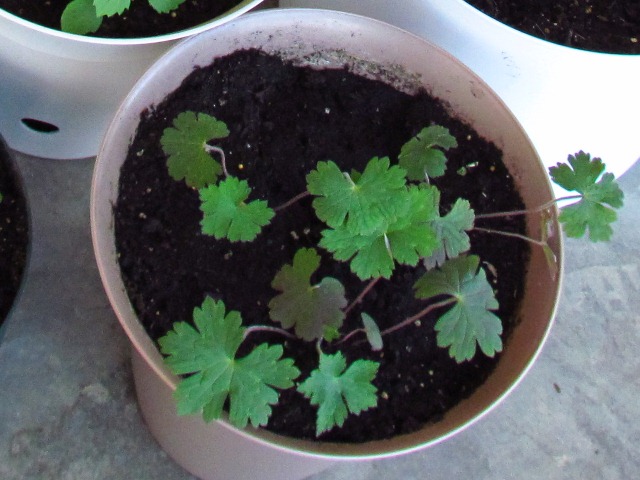
Geraniums. I never planned on planting any geraniums, but the photo from the supplier was awesome. They're supposed to be blue. Blue geraniums??? Ok. They come only eight in a packet. I planted them April 21. Six sprouted, but three died. The remaining three look healthy enough. I have very high hopes for them. Like I said, the photo looked awesome.


Planter #10


These are English daisies, one of my favourite non-blue, non-Insanity flowers. I could only find them as "mixes" from different suppliers, so I bought everything I could find and mixed them all together, but as far as I can tell from the photos, they all look pretty much the same. They're also perennials, so I'm hoping to enjoy these for a while. Though as you can see, it's pretty crowded in there, and I'll have to cull it ruthlessly.


Planter #11


This one looks pretty raggedy but it's one of my favourite plants. I call it Faith. You see, in August 2009 I bought two lemons and planted the seeds. About 15 seeds, if I recall. Five sprouted, two lived. Then I got a job in Yellowknife (484 km away from home) and because the lemons were so little, I brought them with me. They survived, and in the spring they were big enough to get each its own planter, and names. I was trying to think of something clever, but I started calling them "Hope" and "Faith", and it stuck. So this is Faith. Faith has always been slower-growing and less showy, but much more dependable. It never wilts or droops. In 2010 it came to Calgary with me whereas Hope stayed home. This is why the lower leaves are so burnt, because of the long car ride there, the difficult weather in Calgary, and the long ride back. But no matter how badly battered it is, Faith keeps on surviving and growing. It put out branches before Hope, even though it looks poorly. Now it has eight branches and is actually about the same height as Hope. So Faith actually lives up to its name, being the steadfast, unassuming, invincible one.


Planter #12


And this is Hope, the sister tree to Faith. Hope was always a drama queen. It has a big growth spurt, then it droops and sags. Without the stake, sometimes it flops like a mollusc. It's been putting on a ton of growth lately, and it looks very verdant and ambitious, and coincidentally or not, I've been living on hope all this spring. But unlike Faith, Hope is a diva and can't handle hardship. You can't count on it. So somehow, these random names that stuck to them turned out to be entirely apt.

You may notice that the lemon trees are not out on the balcony. Again, because of the threat of frost, but also because I'm worried about the wind damaging them. They may not go out at all this year, or maybe only when I can supervise them and bring them back in as needed. However, I noticed that all their growth was on the side that gets the sun, so after taking these photos, I rotated them 180° to balance them out. We'll see what they make of that.

One issue with these trees is, I didn't pack the soil well enough when I repotted them in the spring, so the soil keeps sinking. I'll know better when I move them up to the next size of planter.


Planter #13


This is Blogger having one of its fits of oppositional behaviour, so I can't get this photo straight. But other than that, this is the third mayday tree. It was the last one left from the culling, other than Peng Dehuai and Liu Shao-ch'i. But when I went to uproot it, it was so sturdy and tough, I didn't have the heart to kill it. So I made a deal: I would transplant it to another planter, but it would have to share with some flowers and live by what the flowers wanted, not by its own ideas. So I transplanted it. In fact it got transplanted twice in five weeks, once from the nursery to Planter #4, and from there to Planter #13. Then I seeded six globe thistles and six asters with it. One of each sprouted. Then the globe thistle was being shaded and not thriving, to I transplanted it to Planter #8, and then from there to the Jungle, as we have seen.

When I transplanted the globe thistle, I noticed that this tree already has a branch, whereas its littermates don't, and the lemons took 16 months to branch. So because this tree is short and stocky and defiant, and because it survived being transplanted twice in five weeks, I named it Deng Xiaoping. Deng was very short and tough too, and he was purged twice and survived and still continued to defy Mao, so it seemed apt. I don't know why that one leaf is so burnt, but the tree seems as strong as ever.

Now there are also two pear seeds in there that I pulled out of the stratification vat on May 14 and May 16. My previous attempt at pears failed, but I hadn't stratified them. I'm hoping these do better; if not, I have six more still stratifying in the fridge.


Planters #14.1, #14.2, #14.3 and #14.4


This is my big project for this year: the Wall of Insanity. There are 1,100 seeds in there, including I think 18 varieties of morning glories: Blue Star, Carnival (mix, I think three varieties), Chocolate, Crimson Rambler, Double Sunrise Serenade, Early Call (mix, I think four varieties), Flying Saucers, Heavenly Blue, Kniola's Black Knight, Pearly Gates, Scarlet O'Hara, and more Star of Yelta. There are also moonflowers and cypress vines, which are both also part of the genus Ipomoea, a variety of thunbergia, and this:


These are hyacinth beans. I call them, collectively, "Darth Plant", because it's the weirdest seeds I've ever seen. Pictured here are the seeds on June 7 prior to seeding; then June 13, 18 and 20. I've never seen a seed sprout is such a bizarre way, but it seems to be surviving. However because it's been slow to start compared to the morning glories, it is rather overshadowed, and probably won't do as well as it would have on its own. If performance is not satisfactory this year, it will get its own planter next year.

I'm hoping that these vines will colonize the entire railing and present a wall of green to the street. With all the different colours of flowers, it ought to look very pretty. Then I will harvest all the seeds. Hopefully I get enough hyacinth bean seeds to do something ornamental with them. They're pretty. I hope all these hurry up and grow, though, because I've had some take 100 days to flower in the past, and that would put us at mid-September, which is the average date of first frost. I'd like a little more time for them to produce their seeds.


Planter #15 and #16


These are two 6" planters that I bought for the baobabs, thinking it would be at least next year before there would be anything big enough to need repotting. I guess I was wrong. This is the current state of the Adansonia digitata sprout in Planter #16. Adansonia za is in Planter #15 and like I said, there is a seed with a root, but it hasn't righted itself and broken the surface yet.

Both these planters are also still inside and I don't think they'll go out this summer at all. They're just too strange and unique to risk them outside.


Planter #17


These are my pumpkins. Every year I plant pumpkins, and every year they fail, but last year they did start fruiting. Then the fruits withered when they were less than 2" in diameter. I'm thinking maybe they didn't like sitting on the concrete. So this year I've got the pumpkins on the opposite side of the lawn from the sun, that way hopefully they'll stretch across the grass and be more comfortable. On the other hand, that puts them at the shadiest part of the balcony. They're still getting at least six hours of sun a day, but they might object, in which case I might have to move them to a sunnier spot later on.

Also new this year, I actually culled them to the best three, instead of leaving twenty in there and wondering why they're not thriving.


Ensemble view


This is as many as I could fit in one photo. You can see the lawn. It's 16 sq. ft. and quite lush. The lawn belongs to the dog; I sowed it for her so she could eat it and lie on it. She likes it. Sometimes she digs it up, though. I need to get some more 2x4s and build up the sides so I can have 7" of dirt in there instead of 3.5.

On the railing you can see one of the window boxes. The other one is out of frame to my right and is going to get a lot less sun, so it will be interesting to compare their water consumption and performance. Planters #14.4 and #17 are also out of frame. And of course Planters #1, #11, #12, #15 and #16 are all inside for various reasons, mostly having to do with the plants being too precious to take a chance outside.

So, that's everybody in my garden – for now. Thanks for joining us. I hope we'll have a nice non-controversial blog experience together. Surely, nobody's going to get critical about someone's garden blog, right? So welcome to the garden, and let's all play nicely together.